If you are under contract on a home in Bedford or Hurst, Texas, the inspection is one of the most useful steps before closing. A professional home inspection gives you a clearer view of the property’s visible and accessible systems. It can also help you understand which items may need upkeep, further review, or future planning.
Homes across the DFW Mid-Cities vary in age and maintenance history. Some were built from the 1960s through the 1980s. Others are newer or updated. Each inspection should focus on the property in front of you.
What Do Home Inspectors Commonly Evaluate in Bedford and Hurst?
Bedford and Hurst are established communities between Dallas and Fort Worth. Local housing often reflects North Texas weather, soil, and construction patterns.
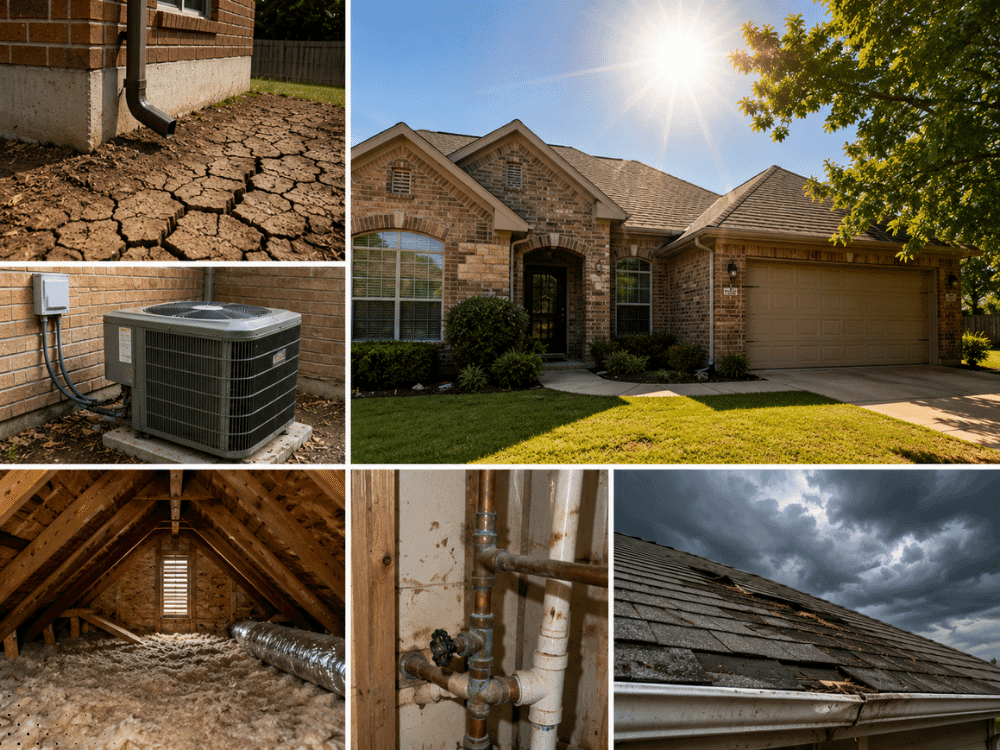
Expansive clay soil may contribute to movement around foundations, patios, walkways, and drainage areas. Long summers can place added demand on air-conditioning equipment. Seasonal storms may affect roof coverings, gutters, flashing, and exterior surfaces.
Older homes may have aging electrical panels, older plumbing materials, limited attic insulation, or systems updated at different times. These conditions do not make a home unsuitable, but they make a detailed inspection important.
Buyers searching for a home inspection in Bedford, TX should choose an inspector familiar with local neighborhoods and North Texas construction.
The same applies to buyers arranging a home inspection in Hurst, TX. Local experience helps the inspector explain findings in the context of the property and surrounding area.
What Happens During a Home Inspection?
A standard home inspection is a visual evaluation of systems and components that are accessible during the visit. The inspector does not open walls or perform destructive testing.
Instead, the inspection documents observable conditions. The inspector may also operate major systems using their normal controls when it is safe and practical to do so.
A typical home inspection may include:
- Foundation and visible structural components
- Roof coverings, flashing, gutters, and drainage
- Attic framing, insulation, and ventilation
- Heating, cooling, and ventilation equipment
- Electrical panels, breakers, receptacles, and fixtures
- Plumbing supply lines, fixtures, drains, and water heaters
- Interior walls, ceilings, floors, windows, and doors
- Exterior siding, trim, grading, patios, decks, and garages
The exact scope may vary based on the property, access, weather, and selected services.
Additional services may include WDI and termite inspections, sewer scope inspections, thermal imaging, pool and spa inspections, sprinkler system inspections, or foundation elevation measurements. These services provide more focused information about specific parts of the property.
How Long Does a Home Inspection Take?
Many home inspections take about two and a half to three and a half hours. Larger homes, older properties, added structures, and extra services may require more time.
A careful inspection should not feel rushed. The inspector needs time to operate accessible systems, document observations, and take photos or videos.
Surety Home Inspections provides an easy-to-read electronic report within 24 hours. Depending on the inspection schedule and property, reports may be available the same day.
Should Buyers Attend the Home Inspection?
Buyers are encouraged to attend, especially near the end of the inspection. Being present gives you an opportunity to see important components and ask questions.
A good inspector can explain routine maintenance, items that deserve monitoring, and conditions that may need further review. This conversation can make the written report easier to understand.
You may also learn where shutoff valves, electrical panels, filters, attic access points, and major equipment are located. That information can help after moving into the home.
Attending the inspection also gives you a better sense of how the property functions. However, buyers who cannot attend can still receive useful information through a detailed report, photos, videos, and follow-up communication.
What Happens After the Inspection?
After the inspection, you receive a report organized by system or area. It should include clear descriptions and supporting photos. Videos may be included when operation is easier to show visually.
Your inspector does not decide whether you should buy the home. The report gives you information to review with your real estate agent.
Depending on your contract and option period, you may request repairs, seek more evaluations, plan future work, or continue with the purchase.
Not every report item has the same importance. Clear explanations help you focus on the findings that matter most to your decision.
When an inspector recommends further evaluation, that usually means a qualified specialist may be better suited to assess that specific system. Examples may include an electrician, plumber, HVAC technician, roofer, structural engineer, or pest professional.
Why Does Local Knowledge Matter in the DFW Mid-Cities?
A home inspector serving Bedford and Hurst should understand local soil, heat, storms, drainage patterns, and housing age.
Poor grading may allow water to collect near the foundation. Attic heat and limited ventilation can affect indoor comfort and cooling performance. Older roof coverings may show wear after years of North Texas weather.
Local knowledge does not replace a complete inspection. It helps the inspector know where to look closely and how to explain what is observed.
Surety Home Inspections also serves Arlington and nearby DFW communities. Buyers looking farther south can use this Arlington home inspection resource to learn what local inspections may cover.
Why Do Buyers and Agents Choose Surety Home Inspections?
Surety Home Inspections combines more than 10 years of construction and inspection experience with a Texas Professional Real Estate Inspector license.
Inspections follow the Texas Real Estate Commission Standards of Practice. This provides a defined scope for evaluating the visible and accessible systems of a residential property.
Jantson McAffrey provides clear explanations and electronic reports with photos, videos, and practical notes. The goal is to help buyers understand the home without confusing language.
Surety serves Bedford, Hurst, Arlington, Fort Worth, and nearby DFW communities. Scheduling is available six days a week.

Frequently Asked Questions
What does a home inspection cost in Bedford or Hurst, TX?
Pricing depends on the home’s size, age, features, and selected services. Contact the inspector with the property address for an accurate quote.
Does a standard inspection include termite or sewer testing?
Not always. WDI and termite inspections and sewer scope inspections are often separate services. Ask what is included before scheduling.
When should I schedule the inspection?
Most buyers schedule when the contract and option period begin. Early scheduling leaves time to review the report and arrange further evaluations.
Schedule a Home Inspection in Bedford or Hurst
If you are buying, selling, or planning ahead, Surety Home Inspections can review the property’s visible and accessible systems.
Visit the Bedford or Hurst service page to learn more. You can also schedule your home inspection online or call or text (806) 674-6798.